First Person on Scene™ (FPOS™ 2)

Course Overview
The “First Person on Scene 2” (RTI First Person on Scene™ 2) training program has been designed to provide participants with advanced knowledge and skills in emergency care for adults, children and infants, with enhanced oxygen administration and the use of an Automated External Defibrillator (AED).
Participants are trained to provide effective support to an injured or ill person until the arrival of healthcare professionals.
Target Audience
It is intended for individuals who wish to provide emergency assistance and hold higher positions of responsibility, such as personnel in security and rescue services, cabin crew supervisors, as well as anyone seeking advanced training leading to a higher-level qualification.
Training Modules
Introduction
- Definitions / International protocols
- Basic physiology of the human body
- Legal issues
- Personal protective measures
- Rescuer psychology
- Calling emergency medical services
Life-Threatening Medical Conditions
- Myocardial infarction
- Ventricular fibrillation (sudden cardiac arrest)
- Airway obstruction
- Severe bleeding
- Shock
- Stroke
- Anaphylactic shock
Adult Basic Life Support
- Checking for breathing
- Maintaining breathing
- Maintaining circulation
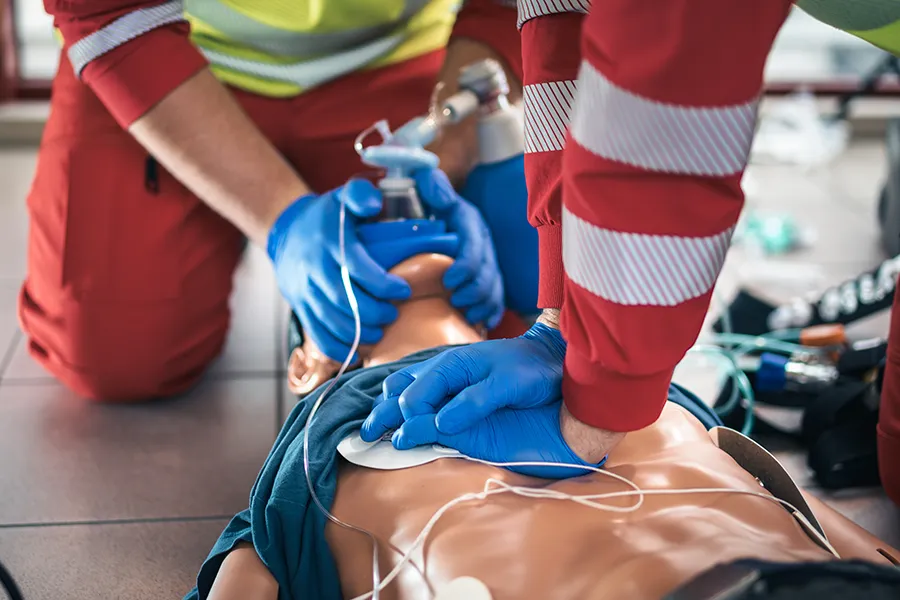
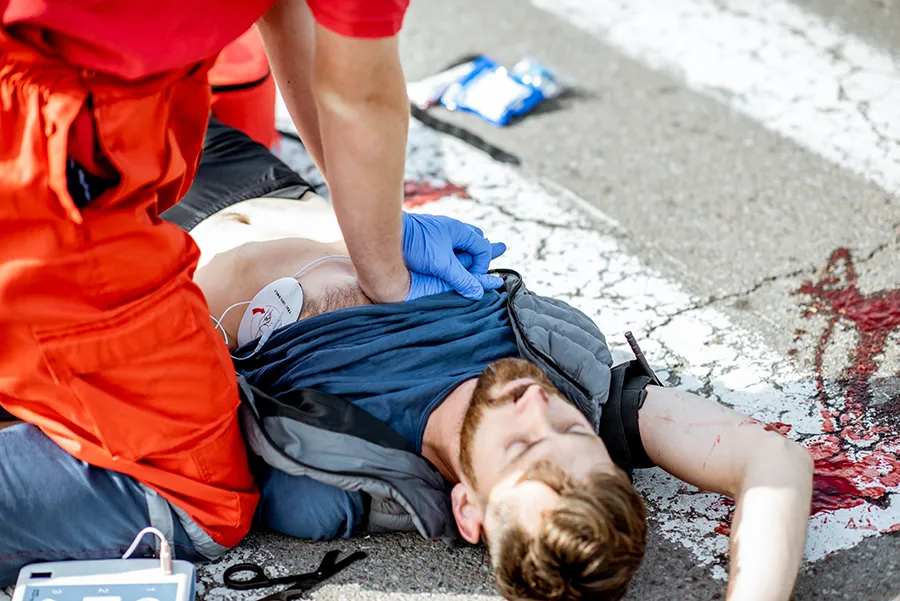
- Cardiopulmonary Resuscitation (CPR)
- Unconscious casualty
- Recovery position
Automated External Defibrillation – Adult
- Description of the AED
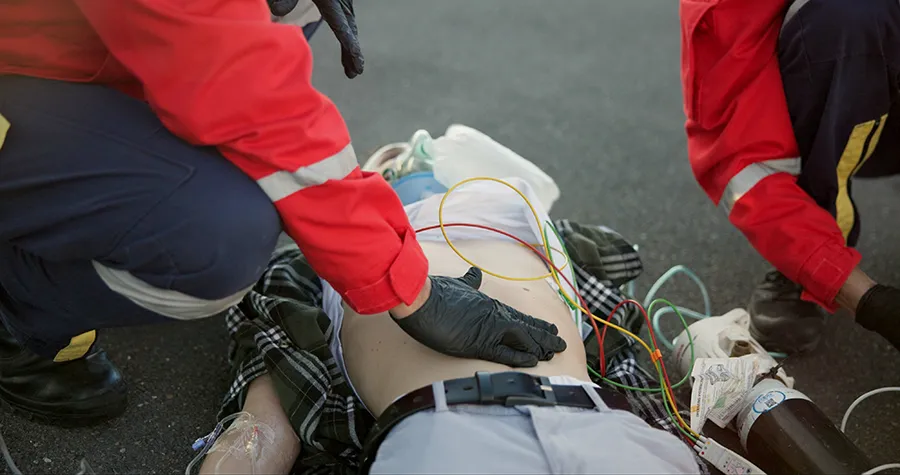
- Operation of the Automated External Defibrillator (AED)
- Connecting the AED to the casualty
- AED voice prompts
- AED safety and maintenance
- Outcomes of AED use
Emergency Oxygen Administration
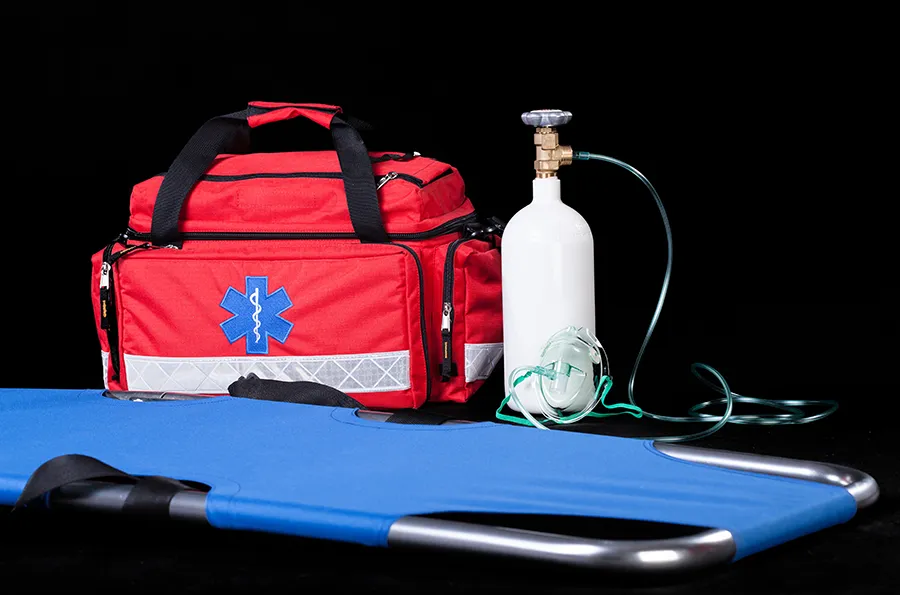
- Use of a continuous-flow oxygen cylinder
- Non-rebreather mask
- Pocket mask for rescue breathing
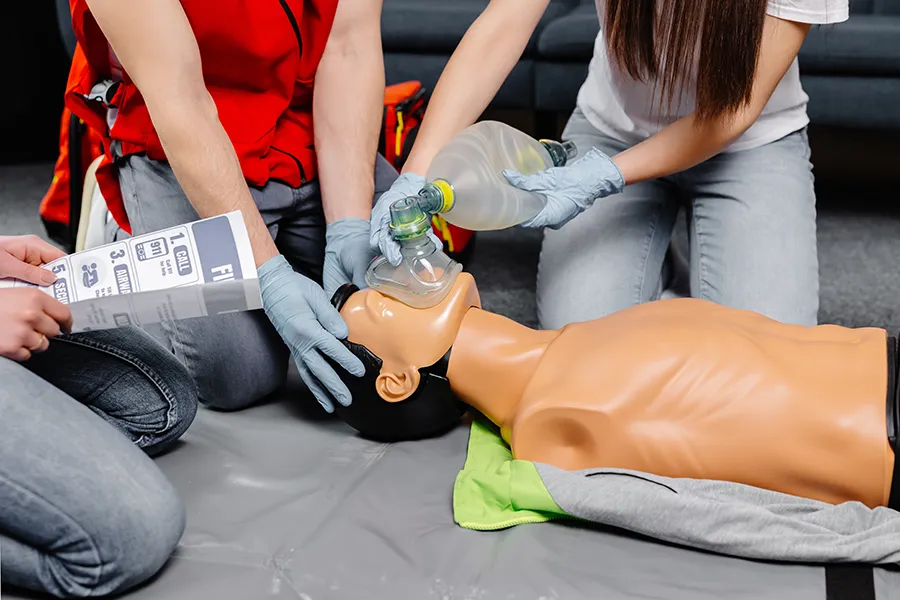
- Bag-valve mask
First Aid (Management of Common Medical Conditions)
- Illness assessment
- Asthma
- Anaphylaxis
- Epinephrine auto-injector
- Epileptic seizure
- Febrile seizures
- Diabetes
- Acute hypothermia
- Heatstroke & heat exhaustion
- Electric shock
- Allergies
- Asthma attack
- Poisoning
- Loss of consciousness
First Aid (Management of Common Injuries)
- Splint application
- Bandaging
- Fractures
- Dislocations
- Sprains & strains
- Management of thermal and chemical burns
- Nosebleeds
- Foreign object injuries
- Head injuries
- Eye injuries
- Dental injuries
- Spinal injuries
- Stings and bites
- Internal bleeding
- Treatment of minor injuries
- Chest trauma
Paediatric First Aid
- Life-Threatening Medical Conditions
- Basic Life Support for children & infants
- Cardiopulmonary Resuscitation (CPR) for children & infants
- Oxygen administration to children (continuous-flow oxygen cylinder)
- Automated External Defibrillation for children
- Management of Medical Conditions
- Management of Common Injuries
Assessment & Certification
- Theoretical assessment with multiple-choice questions
- Practical assessment through standardized practical exercises and scenarios.
The examination result determines whether the candidate passes or fails.
Course Materials
- Training kit
- First aid manuals
- Resuscitation Face Shield
- Resuscitation keyring
- Pen
- Notepad
- First aid basic steps summary card
- Sticker badge
- Certification fee
- Training certificate
All adults may participate in the program without any restrictions or prerequisites, taking into consideration the rigorous nature of the program.
Available at RTI Training Centres
Contact your nearest Authorized RTI Training Centre. Get informed and schedule your training, quickly and easily!
UpcomingCourses
View upcoming scheduled seminars by selecting the location that interests you and secure your participation.