
First Person on Scene™ (FPOS™ 1)
Course Overview
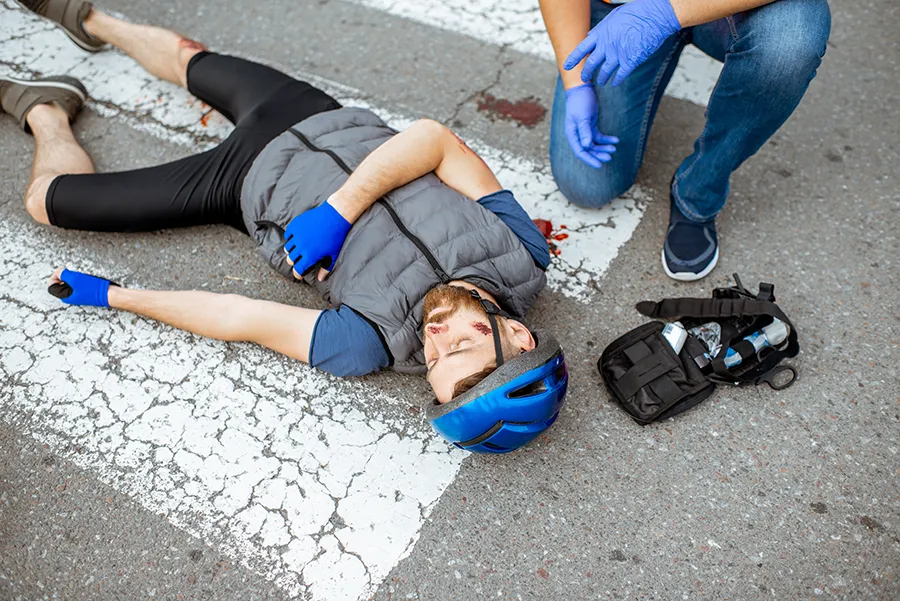
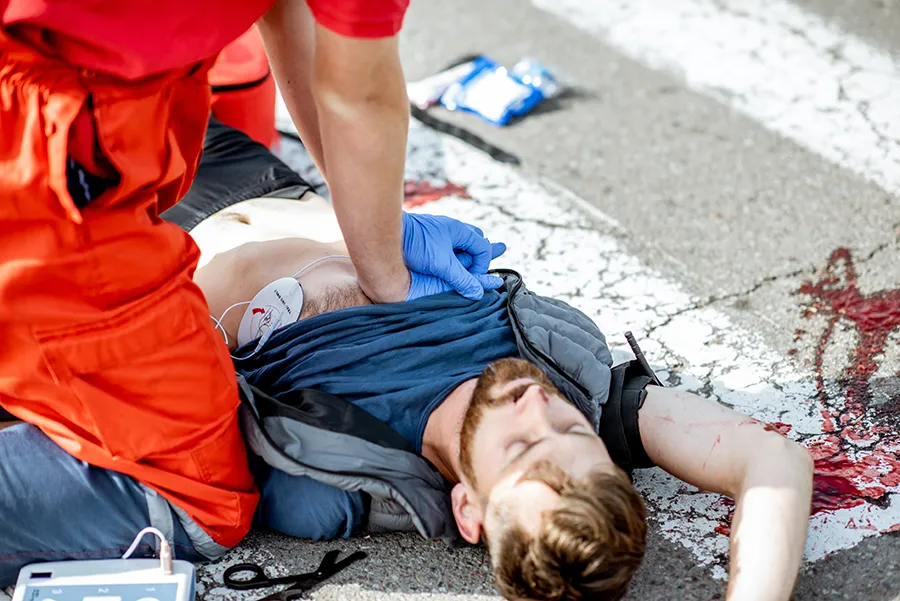
The First Person on Scene™ (FPOS™) Level 1 training program equips participants with targeted pre-hospital emergency care knowledge and advanced practical skills to assess, manage, and stabilize a critically ill or injured casualty until the arrival of Emergency Medical Services (EMS).
Aligned with the latest international resuscitation and emergency care guidelines, the curriculum focuses on comprehensive adult basic life support and immediate trauma and medical response.
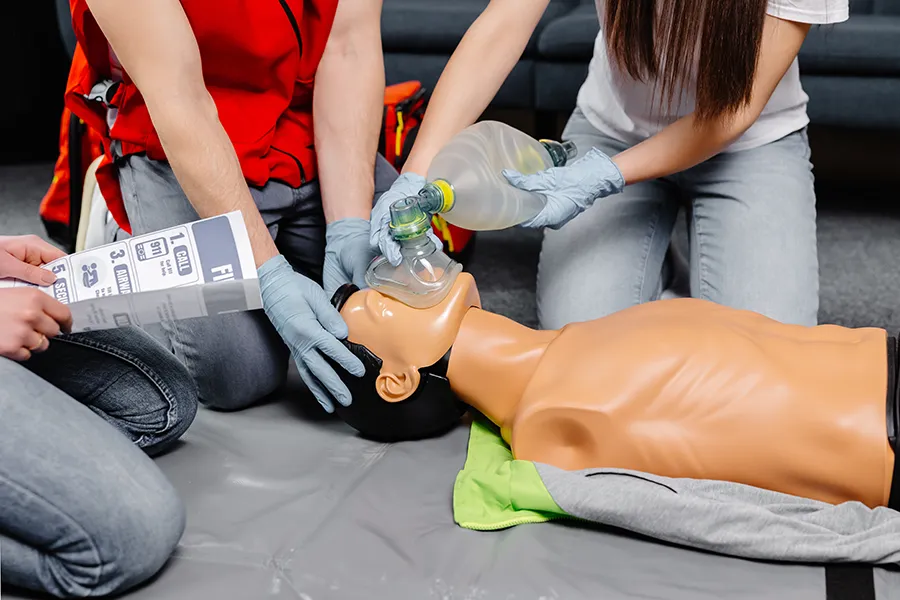
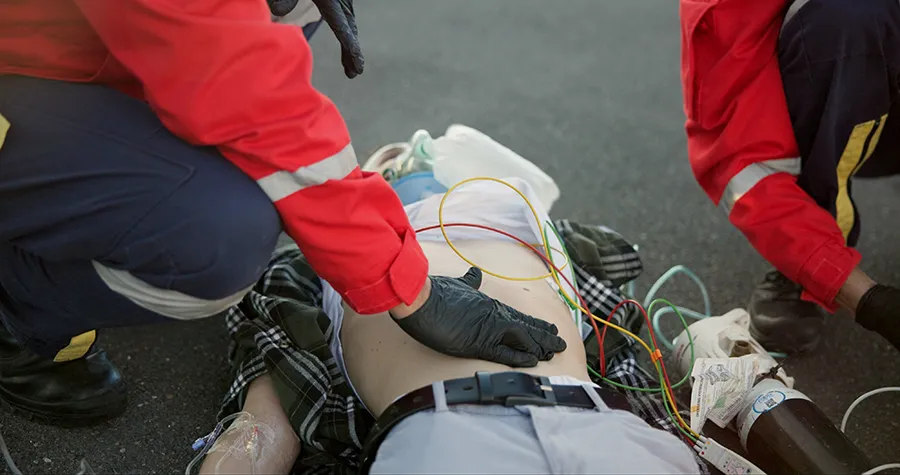
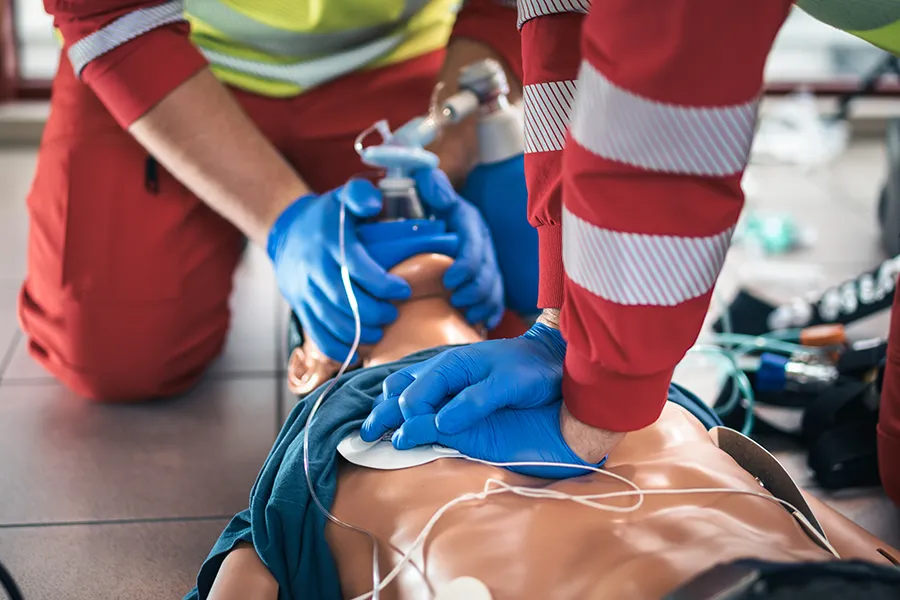
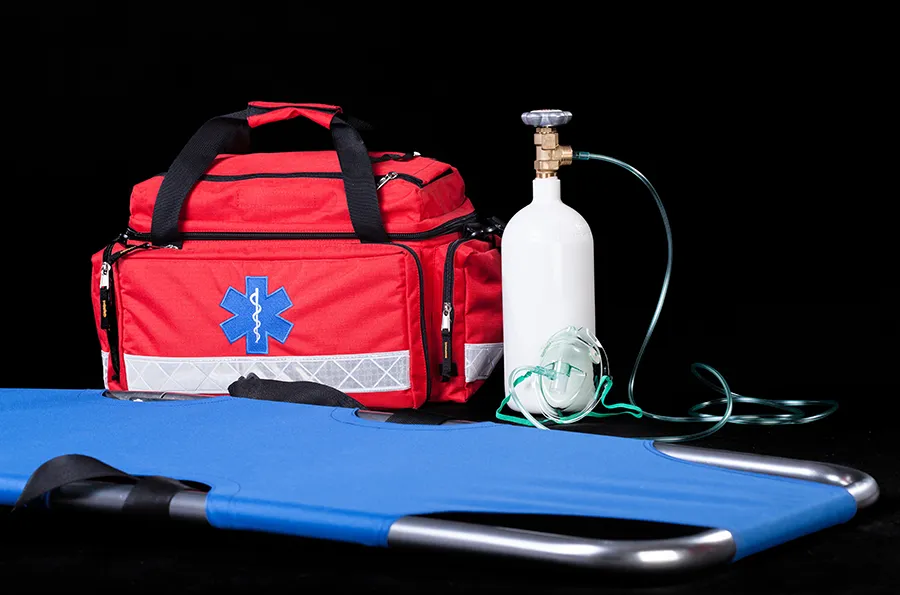
Through intensive, scenario-based hands-on training, responders learn to apply advanced first aid protocols using specialized resuscitation and airway equipment, including Emergency Oxygen administration (oxygen cylinder and delivery devices), basic airway adjuncts, and an Automated External Defibrillator (AED).
Learning Pathways
1. Fully physical presence (theoretical and practical part).
Upon successful completion and examination, you directly receive the internationally recognized RTI certification.
2. Distance learning (completion of the theoretical part) and electronic assessment.
You receive an electronic distance training certificate. Within 1 year you can complete the practical part of your program with a certified RTI instructor and obtain the international Rescue Training International certification.
Target Audience
The First Person on Scene™ (FPOS™) Level 1 program is designed for individuals who are expected to provide immediate, structured pre-hospital emergency assistance as part of their professional duties or operational activities, and for anyone seeking specialized, internationally aligned training leading to an advanced first responder qualification.
This advanced hands-on training is particularly suitable for:
Security personnel, close protection officers, and private security teams operating in corporate facilities, high-profile events, and public venues.
Rescue services staff, civil protection volunteers, and emergency response teams requiring operational proficiency in casualty stabilization, Emergency Oxygen administration, and AED use.
Aviation cabin crew, maritime staff, and transport personnel responsible for managing acute medical emergencies in environments where professional EMS arrival may be delayed.
Designated industrial first aiders, health and safety officers, and high-risk workplace responders looking to upgrade their basic first aid certification to an advanced pre-hospital standard.
Motivated individuals and aspiring responders interested in acquiring specialized, scenario-tested skills beyond foundational first aid.
Training Modules
Introduction
- Definitions / International protocols
- Basic physiology of the human body
- Legal issues
- Personal protective measures
- Rescuer psychology
- Calling emergency medical services
Life-Threatening Medical Conditions
- Myocardial infarction
- Ventricular fibrillation (sudden cardiac arrest)
- Airway obstruction
- Severe bleeding
- Shock
- Stroke
- Anaphylactic shock
Adult Basic Life Support
- Checking for breathing
- Maintaining the airway and breathing
- Maintaining circulation
- Cardiopulmonary Resuscitation (CPR)
- Unconscious casualty
- Recovery position
Automated External Defibrillation – Adult
- Description of the AED
- Operation of the Automated External Defibrillator (AED)
- Connecting the AED to the casualty
- AED voice prompts
- AED safety and maintenance
- Outcomes of AED use
Emergency Oxygen Administration
- Use of a continuous-flow oxygen cylinder
- Non-rebreather mask
- Pocket mask for rescue breathing
- Bag-valve mask
First Aid (Management of Common Medical Conditions)
- Illness assessment
- Asthma
- Anaphylaxis
- Epinephrine auto-injector
- Epileptic seizure
- Febrile seizures
- Diabetes
- Acute hypothermia
- Heatstroke & heat exhaustion
- Electric shock
- Allergies
- Asthma attack
- Poisoning
- Loss of consciousness
First Aid (Management of Common Injuries)
- Splint application
- Bandaging
- Fractures
- Dislocations
- Sprains & strains
- Management of thermal and chemical burns
- Nosebleeds
- Foreign object injuries
- Head injuries
- Eye injuries
- Dental injuries
- Spinal injuries
- Stings and bites
- Internal bleeding
- Treatment of minor injuries
- Chest trauma
Assessment & Certification
- Theoretical assessment with multiple-choice questions.
- Practical assessment through standardized practical exercises and scenarios.
Course Materials
Course Handbook
CPR Face Shield
Writing Materials
Quick Reference Guide (Pocket Card)
Certification Fee
International RTI Certification
There are no participation requirements.

Available at RTI Training Centres
Contact your nearest Authorized RTI Training Centre. Get informed and schedule your training, quickly and easily!
UpcomingCourses
View upcoming scheduled seminars by selecting the location that interests you and secure your participation.
There are no scheduled seminars.